
The result is decent, but it had a few bizzare/trivial syntax errors I had to fix manually: it would do an extra closing bracket or paren a few times, and wanted to separate function definitions with comma. Not sure what that was about, but otherwise the output run just fine.
So, with those qualifiers, I think it's a decent local coding model. It roughly compares with GPT-4.1 (!!), released 14 months ago, on the output: https://senko.net/vibecode-bench/2025/minesweeper-gpt-4.1.ht... (actually I'd call it better, but those syntax errors...)
I ran the quantized version (4-bit GGUF) on my consumer-grade card with 12G of VRAM and got 5t/s for output. Not for interactive use for coding, but fairly capable model.
To me, it's fascinating how much progress we got in over a year. GPT-4.1 was considered an extremely capable coding model. Now we got something with 12B of params performing roughly the same (in this specific benchmark, disclaimers, etc).
Lists of various models I tested: https://senko.net/vibecode-bench/
For 16GB laptops, Qwen 3.5 9B is the undisputed champ.
Gemma 4 31B is the top dog at small model coding, but is dense so it needs ~48GB unified RAM for full context. If you want decent coding on a laptop you need a lot of RAM. But this shouldn't be surprising, dev machines have always needed lots of resources.
you can run qwen 3.6 35BA3B on a 12-16GB vram gpu and ot works pretty well.
https://www.youtube.com/watch?v=8F_5pdcD3HY&t=1s
even the 27B in some quants can fit.
https://www.reddit.com/r/LocalLLaMA/comments/1tkmgwj/qwen27b...
qwen IMO is far better for coding, esp agentic coding when combined with something like Pi, it comes probably close enough to Sonnet for a lot of use cases.
Gemma family is better for almost all other tasks you'd use a local llm for.
> For 16GB laptops, Qwen 3.5 9B is the undisputed champ.
Thanks
Qwen models are always good. The 35B A3 model is a MoE model which means it has higher performance in RAM constrained environments compared to the 27B dense model (which is better at coding).
I don't have experience to rate it's Hebrew or Greek performance but apparently it's not bad.
For smaller ones like my native Latvian, the output could be confused for good translation from across the room, the words do look like Latvian words. But the quality is Google translate circa 20 years ago, tops.
It could probably do a decent enough translation to English, if all you need is to get the gist of text. But for smaller European language outputs, nothing comes close to Gemini.
(not recommendation, I've not used it .. yet)
Which quant of Gemma? For coding Qwen seems to be pretty far ahead, but generally Gemma seems to have a "vaster" set of knowledge, but armed with a search tool it doesn't really matter, and Qwen 3.6 been really great for all sorts of tool calling. I mostly do programming and related things though, fwiw.
> I was going off of peoples' opinions on reddit
It's extremely astroturfed all over the place, especially the larger subreddits, and especially the one related to a specific animal in a specific location. It's sad, as early on it was a great resource, but now it's mostly paid posts and a race to the bottom, with lots of piling, and all the knowledgeable people I used to recognize are nowhere to be found.
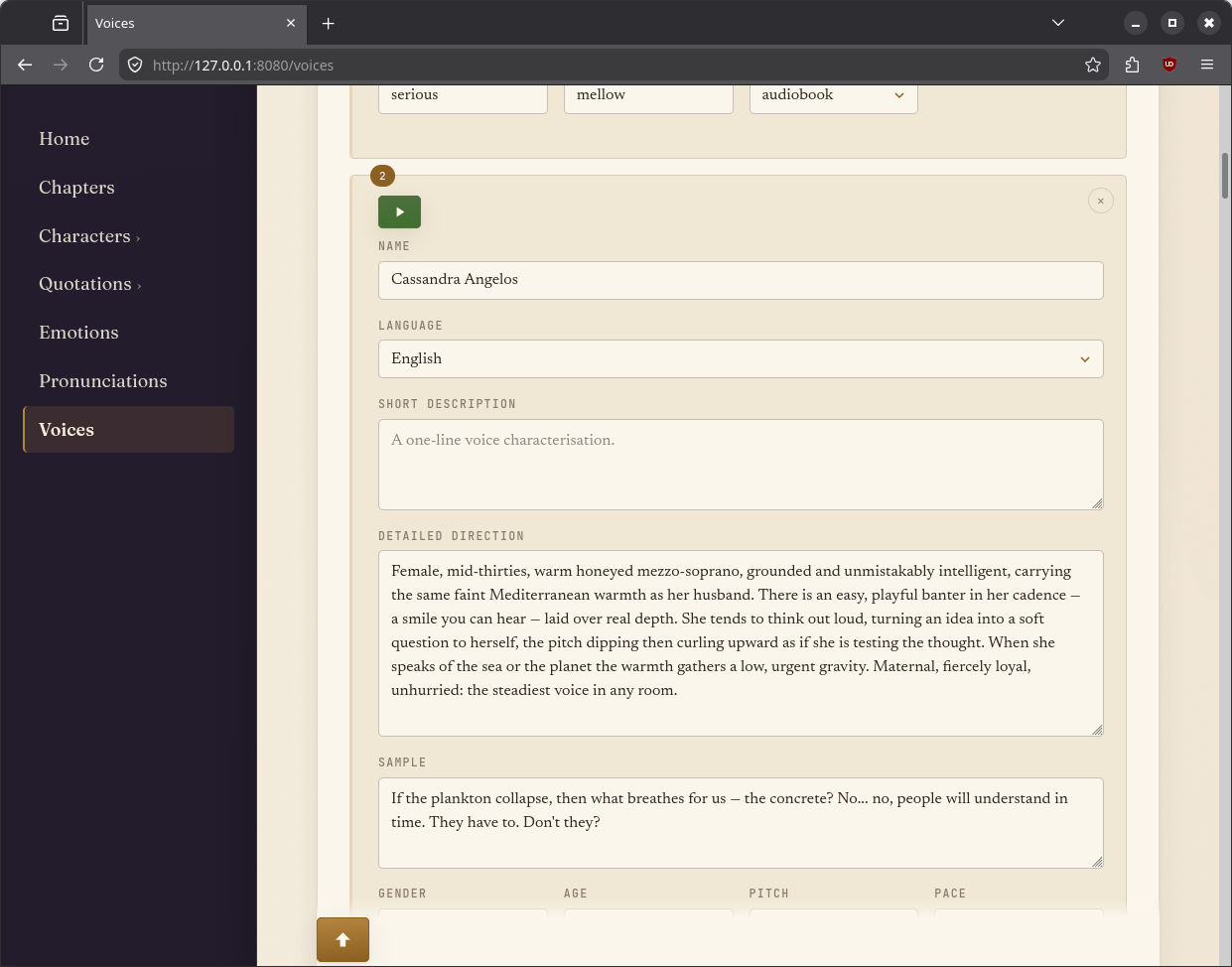
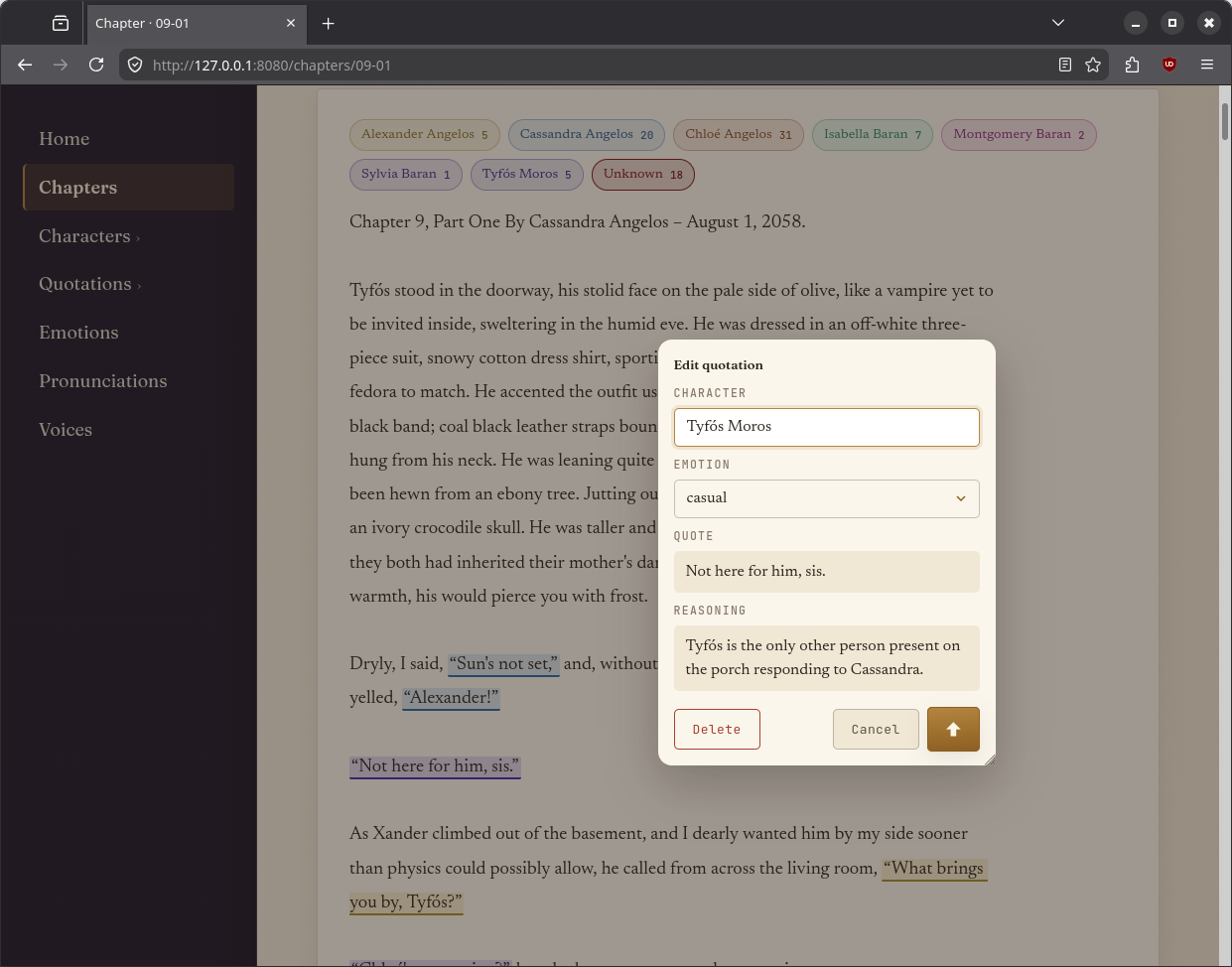
Screens:
* https://i.ibb.co/TBBV5nJk/kl-01.png (voice design)
* https://i.ibb.co/nNvvKDyV/kl-02.png (quotation attributions)
It's right there in the middle benchmark bar "LiveCode Bench" 72%.
(Though it is gaslighting me about PHP anonymous functions.)
I would not use it to write code (the MoE 26B writes really good PHP), but it appears to have absolutely good enough knowledge to write implementation plans, and I think that could be useful in a sort of agentic coding tutorial environment.
I test these models with simple things. My favourite mini test is asking an AI to write a "last login" tracker facility for wordpress with a sortable admin column, which is trivial code — only a few lines -- but touches on a reasonably deep bit of the WP API. If you ask it to prompt you with clarifying questions, those questions are quite revealing.
It can write the code. Not tested it but I am sure it works. It's not as elegant.
It is not as good at understanding nuanced instructions as either the 26B or the sparse Qwen 3.6. There are concise things you can say in a prompt to Qwen 3.6 that have it draw logical conclusions that fully impress me.
I am more impressed by it than I expected. I reckon this would be quite useful in a tutorial tool.
(I say this as a sort of qualified cynic; I think much of the AI circus is a farce. But if these things are to ever be useful for teaching without making people dependent on some cloud "intelligence tap", this is progress)
I don't have unified RAM tho and offloading to CPU is dog slow, which is why I'm interested in 7b-12b models.
Why do people with modern laptops have such little amounts of ram?
Fine if work's paying, but for personal devices (that might have been purchased before local models got good), people have what they have.
I’m a system administrator and I can do my job with no issues at 16GB. Most days 8GB would likely be enough, since I’m just using and abusing other systems anyway.
Java devs at my last job were still running 16GB in 2020. Admittedly that was a while ago. Still not a decade.
Close some Chrome tabs?
Probably doesn't matter these days with all-day batterys, but now the demand-supply curve is lopsided.
I think the mayor win for coding was reasoning. That's why such a small model can match GPT-4.1 in coding, but I suspect that GPT-4.1 still wins in general world knowledge due to bigger size.
Encyclopedic knowledge matters relatively little in perspective, given the expectable future developments: even the more knowledgeable of us will use that knowledge for reasoning and intuition (and we will have absorbed the intellectual keys during our training), but under our professional hat we should in theory be ready to go "I stand corrected" and "more precisely" with the actual data at hand.
I.e.: for the encyclopedic knowledge needed, the /understander/ will have a RAG subsystem and a corpus of knowledge to inquire upon processing queries.
(Corroboration: we can't delirate, and neither can the machine...)
That speed for token output indicates to me that it somehow is using hybrid mode and involving cpu+system ram somehow. That ~5tk/s is about the ram bandwidth of DDR4 RAM versus that size model at 4bit. Any consumer GPU with 12 GB like a nvidia rtx 2080 or rtx 3060 should be doing 20+ tk/s with llama.cpp and CUDA backend.
I should play a bit more with llama.cpp options and see what bappened there. Thanks!
Up until this point, I've found the cost/value to unequivocally favor using a cloud subscription, but I would be lying if I didn't worry that one day OpenAI is going to increase the price for my subscription by 5-10x. I rely on these tools enough that if there is a real viable local option, I'm going to take it.
Not really. There's a reason the announcement didn't include ANY benchmark (!) and didn't mention EXACTLY what is the memory bandwidth. It's going to be dog-slow unusable for large models, as tok/sec is basically bandwidth divided by active weights. Rumoured 300GB/s / 30GB active weights (decent model) = 10 tokens per second, which is really slow
The Nvidia boxes have only slightly more memory bandwidth, so I wouldn't expect them to be notably faster. At least not enough to make it useful interactively at that scale.
the value of local models is allowing normal people to access AI without needing to subscribe to cloud services. this is esp imp for the rest of the world where even a 12GB gpu is extremely expensive.
there is no real viable local option that will come even close to Sonnet/Gemini Flash or the cheaper chinese models. Even if your pc costs <$2k you are never going to recoup the hw costs, and the results will be far worse.
As a work tool, this is reasonably priced. You can save a bit of money by opting for a non-laptop form factor.
I'm looking forward to the fallout when the data center bubble bursts. There's a good possibility we'll see a glut of hardware, either on the used market or from manufacturers that no longer have massive orders from OpenAI and the like.
Thank you for giving me hope!
Can you instruct it to use a lsp?