
Humans don't have a ton of preferences for the electricity they consume or the water they drink, just that it exists. It's a commodity, so a good task for government. Housing is not an undifferentiated commodity and is subject to extreme variances in preference. Markets do differentiation and preference matching infinitely better.
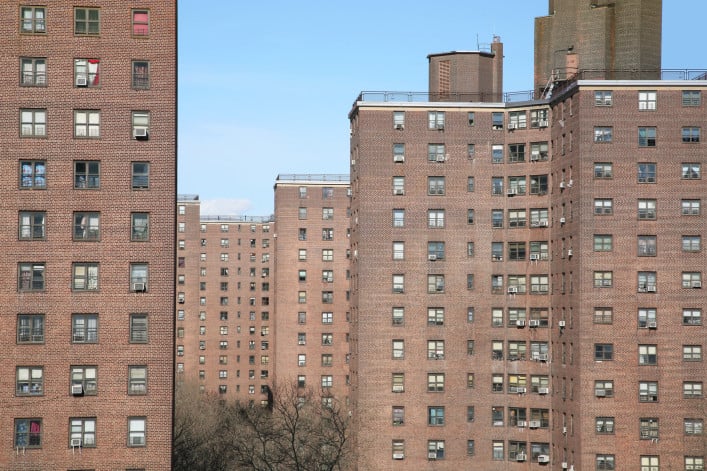
Hence why Government housing always takes the form of a utilitarian blight on the community with giant towers of tiny apartments with tiny windows...doesn't matter if its communist Russia or the richest capitalist city on earth (NYC), all government housing results in the same outcome.
Assuming someone will chime in with some "halo" government housing project in the nordics that represents like 0.01% of the government stock there but socialists will use as propaganda. However, it's important to remember these are not cherry picked examples, they are median examples:
[1] NYC government housing: https://www.brickunderground.com/sites/default/files/styles/...
[2] Russian government housing: https://i.redd.it/twz37r739xse1.jpeg

Singapore is different because they eliminated the "cheap" part. Singaporean HDB flats are expensive, have extremely long wait times (you're stuck for life when one comes up), while still being super tiny. Fertility rates are 0.87 there (replacement rate is 2.1). The domestic population is literally disappearing itself. I'm sure highly regulated tiny housing stock and development policy has no influence on family size though...
I am saying just like any other capitalist endeavour, where things that barely existed or were quite expensive many years ago eventually reached a point where both the price became so low and quality so good that it became a mindlesss thing eg sawblades. And housing for whatever reason has been an extremely anticapitalist market. Even if we take the exact same houses people want today, their execution seems far from optimized. Think of something like precutting all the timber and sheets at a factory and doing some light adjustment and fitting on site, developing new materials that are cheaper or easier to work with tools, etc there are countless angles of attack.
In optics for example, it was mostly this rather bespoke work by a few artisans and people back then might have said this needs a fine touch that can't be done on mass scale. And then Carl Zeiss emerged. I feel housing is in the pre Carl Zeiss era.
EDIT: Neither example looks bad to me. The russian looks denser but both look clean and well organized. It doesn't at all look like blight to me, any more than a grid of houses in a suburb does. It's clean and geometric just like rows of houses in suburbs. If you like one but have a problem with another, I think you are trying to get offended deliberately.